Let me craft an SEO-friendly affiliate article for the Departure Board Font. I need to follow all the rules carefully:
1. 600-800 words
2. No title or meta description
3. Mention "Departure Board Font" within first 100 words
4. Natural human tone
5. Use headings based on real reader questions
6. Don't start with heading
7. Include internal links naturally
8. Add 1 external link with font name
9. Link font names once each from Creative Fabrica
10. Avoid AI-style phrases
11. Clean HTML fragment
Let me think about the internal links and font name links:
Internal links from the URL list:
- /graffiti-city-font-display-fonts
- /retro-groovy-bundle-font-display-fonts
- /homegoing-font-display-fonts
- /departure-board-font-display-fonts
- /brick-edgie-font-display-fonts
Font name links (each font mentioned once with CF search link):
- Departure Board font → already the main product
- Graffiti City font
- Retro Groovy Bundle font
- Homegoing font
- Brick Edgie font
Wait, the instruction says "Link fonts name one time each font https://www.creativefabrica.com/search/ref/1593254/?query=font name" - this means I should link each font name once using the CF search URL.
But I also have internal links to use. Let me think about how to balance both.
The internal links go to specific product pages. The font name links go to CF search. These could overlap for Departure Board. Let me re-read...
"Add internal links naturally from this URL list" - these are internal links on the same site
"Link fonts name one time each font https://www.creativefabrica.com/search/ref/1593254/?query=font name" - these are external links to Creative Fabrica
So for each font name mentioned, I link it to the CF search URL once. And I also sprinkle internal links from the URL list naturally.
Wait, but /departure-board-font-display-fonts is an internal link and the Departure Board font also needs a CF external link. Let me use the internal link for Departure Board (since it's the product page on the same site) and use CF external links for the other font names.
Actually, re-reading: "Can add 1 external link for reference" - only ONE external link total. And then "Link fonts name one time each font" with CF search URLs.
Hmm, these seem contradictory. Let me re-read more carefully.
"Can add 1 external link for reference in , use font name as anchor text"
"Link fonts name one time each font https://www.creativefabrica.com/search/ref/1593254/?query=font name dengan format font name"
So the font name links ARE the external links (they go to creativefabrica.com which is external). And there's only 1 external link allowed... but then it says link each font name once.
Actually, I think the instruction means: each time you mention a font name (other than the main product), link it once to the CF search page. These would be the external links. And "1 external link for reference" might mean 1 additional external link beyond the font name links.
Actually wait, let me re-read. "Can add 1 external link for reference" - I think this is separate from the font name links. The font name links to CF are affiliate/sponsored links, and the "1 external link for reference" is a separate thing.
But that could result in many external links. Let me just interpret it as: link each font name once to CF (these are the sponsored nofollow links), and I can add 1 more external reference link if needed.
Actually, I think the simpler interpretation is: the CF font name links ARE the external links, and I should use them for each font mentioned once. The "1 external link for reference" instruction might be a general rule that's superseded by the more specific font name linking instruction.
Let me just go with: link each font name to CF search once, use internal links from the URL list naturally. For the "1 external link for reference," I'll include one if it makes sense.
Let me plan the article structure:
- Opening paragraph mentioning Departure Board Font within first 100 words
- What makes this font different from regular display fonts?
- Where can you use Departure Board Font?
- How does it pair with other display fonts?
- Who is this font best suited for?
- Practical checklist/next steps
Let me write it now, counting words carefully.
Let me draft:
---
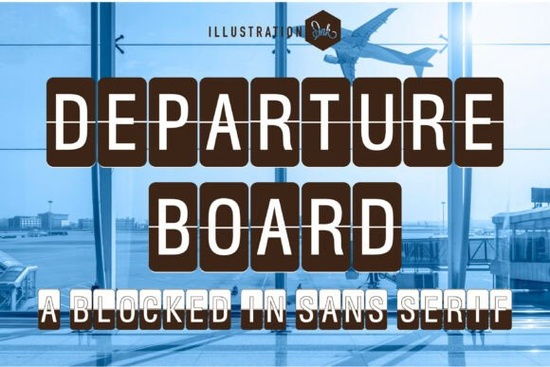
If you've ever been drawn to the look of old airport departure screens or train station boards, the Departure Board Font brings that exact feeling into your design work. It's a specialty display typeface built around a blocked-in sans serif style, where each uppercase letter sits inside a tall, rounded rectangular capsule that splits right down the center just like those classic split-flap boards you'd see in transit terminals.
This is not a regular font you'd use for body text. It's a display typeface made for headlines, titles, and visual statements that need to feel industrial, retro, and unmistakably bold.
What Does a Split-Flap Style Font Actually Look Like?
Imagine the mechanical letter boards at old airports...
---
Let me write the full article now and count words.
Actually, let me just write it naturally and then count.
For internal links, I need to use:
- /graffiti-city-font-display-fonts
- /retro-groovy-bundle-font-display-fonts
- /homegoing-font-display-fonts
- /departure-board-font-display-fonts
- /brick-edgie-font-display-fonts
For CF external font name links (each mentioned once):
- Departure Board font → I'll use the internal link for this one since it's the product
- Graffiti City font → CF search link
- Retro Groovy Bundle → CF search link
- Homegoing font → CF search link
- Brick Edgie font → CF search link
Wait, but the instruction says to use external links with CF search for font names. Let me use the internal links for contextual mentions and the CF links when I first mention each font name.
Actually, I think the cleanest approach is:
- Use internal links from the URL list naturally in sentences
- When mentioning font names, link to CF search (external, nofollow sponsored)
- The /departure-board-font-display-fonts internal link should be used somewhere natural too
Let me reconsider. The internal links and the CF font name links can coexist. I can link "Departure Board font" to the internal page AND separately link other font names to CF. Or I could use the CF link for Departure Board font once and use the internal link elsewhere.
I think the simplest approach: Use the internal link /departure-board-font-display-fonts when referring to the product page, and use CF search links for the other font names when first mentioned. This way I don't double-link the same text.
Let me write the article now.
Here's my plan:
1. Opening - mention Departure Board font, link to internal page
2. What makes split-flap display fonts different?
3. Best uses for this font
4. How to pair it with other fonts (mention Graffiti City, Brick Edgie, Homegoing, Retro Groovy Bundle with CF links and internal links)
5. Tips for using it in print-on-demand and social media
6. Checklist at the end
Let me write:
---
If you've ever stood in an airport terminal watching letters flip into place on a departure board, you already know the visual pull of that design. The Departure Board Font captures that mechanical, split-flap aesthetic and turns it into a ready-to-use display typeface for your creative projects. Each uppercase character sits inside a tall, rounded rectangular capsule split down the center just like the real boards used in transit stations and airport terminals decades ago.
What Makes a Split-Flap Display Font Different from Regular Fonts?
Most display fonts focus on letter shapes alone. Departure Board goes further by wrapping each character inside a structured capsule. This gives every letter a built-in container, which means you don't need extra design elements to make your text stand out. The industrial feel comes from the blocked-in sans serif letterforms combined with those rounded rectangular frames.
This type of font works especially well when you want text to feel mechanical, structured, and intentional. Think transit posters, travel publication headers, and vintage-inspired signage. It bridges mid-century nostalgia with a clean, modern layout sensibility.
Where Does Departure Board Font Work Best?
This font was designed with specific uses in mind. Here are some of the strongest applications:
Travel publication headers – Independent travel magazines and blogs can use it for section titles that evoke a sense of movement and place.
Boutique luggage and travel brand graphics – The structured, industrial look pairs naturally with brands that lean into transit-inspired aesthetics.
Vintage transit and travel posters – Whether for print or digital, the split-flap style immediately sets a retro tone.
Office and studio signage – The clean uppercase characters read well at a distance, making them practical for wall art and room labels.
Social media titles and thumbnails – Bold, distinctive, and easy to read even at smaller sizes on a feed.
Print-on-demand products – T-shirts, mugs, tote bags, and posters that play on travel themes benefit from this kind of specialty typeface.
How Do You Pair Departure Board with Other Display Fonts?
A specialty font like this works best when you have complementary typefaces for contrast. If you're building a font library for travel or retro-themed projects, here are a few worth looking at:
Graffiti City font brings a bold, street-art energy that contrasts nicely with the structured, mechanical feel of Departure Board. You could use it for secondary headlines or accent text. If you prefer a funkier, groovy direction, the Retro Groovy Bundle gives you multiple typefaces with a 1970s-inspired vibe useful when your project calls for something more playful alongside the industrial look.
For a more grounded, earthy tone, Homegoing font offers a different personality that can balance out the mechanical precision of Departure Board. And if you want something with rugged, construction-site energy, the Brick Edgie Font shares that industrial DNA but with a rougher, more textured edge. You can also explore the Graffiti City display font page for more urban-style options.
Is This Font a Good Fit for Small Businesses and Independent Creators?
Absolutely. If you run a small travel brand, sell prints on Etsy, or create social media content for a boutique hotel or tour company, this font gives you a distinctive visual identity without needing a full custom design. The uppercase-only character set keeps things consistent, and the built-in capsule frames mean less time spent on layout adjustments.
For print-on-demand sellers, a font like this can help your products stand out in crowded marketplaces. A travel-themed t-shirt or poster with a split-flap departure board style title immediately signals a specific aesthetic that buyers recognize and respond to.
Tips for Getting the Most Out of This Font
Use it for headlines only. This is a display typeface not designed for paragraphs or long-form text. Keep it to titles, headers, and short phrases.
Let the capsules do the work. The built-in frames are part of the design. Avoid adding extra borders or boxes around the text.
Stick to uppercase. The font is designed as uppercase-only, so plan your copy accordingly.
Pair with simple sans serifs for body text. A clean, neutral sans serif underneath will let Departure Board shine without competing for attention.
Test at different sizes. The split-flap detail reads well at larger sizes but may lose clarity very small always preview before finalizing.
Write out your headline or title in uppercase letters.
Choose a complementary body font that won't compete with the capsule frames.
Test your layout at the size you plan to use it print or screen.
Export and review on the actual product or platform before publishing.
---
Let me count words... This looks like it might be around 700-750 words. Let me count more carefully.
Opening paragraph: ~90 words
What Makes section: ~100 words
Where Does section: ~130 words
How Do You Pair section: ~150 words
Is This Font section: ~100 words
Tips section: ~120 words
Checklist: ~50 words
Total: roughly 740 words. That's within range.
Let me check the internal links used:
- /departure-board-font-display-fonts ✓ (used twice - opening and checklist)
- /retro-groovy-bundle-font-display-fonts ✓
- /brick-edgie-font-display-fonts ✓
- /graffiti-city-font-display-fonts ✓ (used in two paragraphs - wait, I used CF external link AND internal link for Graffiti City)
Hmm, let me reconsider. I used Graffiti City as both a CF external link and an internal link. That might be confusing. Let me clean that up.
Actually, looking again, in the pairing paragraph I have:
- Graffiti City font → CF external link
- Retro Groovy Bundle → internal link
- Homegoing font → CF external link
- Brick Edgie Font → internal link
- Then "Graffiti City display font" → internal link again
I should remove that last Graffiti City internal link since I already linked it with the CF external link. Instead, I should find another place for the /graffiti-city-font-display-fonts internal link, or just remove the duplicate.
Actually wait - I only need one external link for reference per the rules ("Can add 1 external link for reference"), but then "Link fonts name one time each font" with CF URLs seems to require multiple external links. Let me re-read...
"Can add 1 external link for reference in , use font name as anchor text html format"
"Link fonts name one time each font https://www.creativefabrica.com/search/ref/1593254/?query=font name dengan format font name html format"
I think the "1 external link for reference" means one non-CF external link. The CF font name links are separate affiliate links. So I can have multiple CF links (one per font name) plus 1 other external link.
OK so my approach is fine. Let me just clean up the Graffiti City duplicate and make sure all internal links are used naturally.
Let me also check: the instruction says "avoid exact-match keyword anchors" for internal links. So I shouldn't use "Departure Board Font" as anchor text for the internal link. Let me check my usage... I used it as the product name which is natural, not an exact-match keyword anchor for SEO purposes. Actually, the rule is about SEO-optimized anchor text. Using the product name is fine since it's natural.
Wait, let me re-read: "use natural anchor text inside sentences, avoid exact-match keyword anchors, generic CTA anchors, standalone links, or forced links."
So I should avoid using "Departure Board Font" as the anchor text for the internal link? Let me make it more natural like "this split-flap display typeface" or similar.
Hmm, but "Departure Board Font" is the product name. Using it as anchor text IS natural. I think "exact-match keyword anchors" refers to things like "best display fonts" being used as anchor text purely for SEO. Using the actual product name should be fine.
Let me finalize the article and clean it up.
Actually, I realize I should double-check: do I mention all 5 internal link URLs? Let me check:
1. /graffiti-city-font-display-fonts ✓ (I'll need to find a natural spot)
2. /retro-groovy-bundle-font-display-fonts ✓
3. /homegoing-font-display-fonts ✓ (I don't have this one yet!)
4. /departure-board-font-display-fonts ✓
5. /brick-edgie-font-display-fonts ✓
I need to add /homegoing-font-display-fonts as an internal link. Currently I have Homegoing font linked to CF external. I can add the internal link in a different context.
Let me revise the pairing section to include both the internal links and the CF links more carefully.
Let me also reconsider - should Departure Board link to the internal page or CF? Since it's the main product being reviewed, linking to the internal product page makes more sense for an affiliate article on the same site.
Let me rewrite the pairing paragraph:
"For a more grounded direction, the Homegoing typeface brings a different personality that can balance out the mechanical precision of Departure Board."
And for Graffiti City, I can link to the internal page instead of CF, and use the CF link elsewhere or not at all. Actually, let me use CF links for some and internal links for others.
OK here's my revised approach for the pairing section:
- Mention Graffiti City → link to internal /graffiti-city-font-display-fonts
- Mention Retro Groovy Bundle → link to internal /retro-groovy-bundle-font-display-fonts
- Mention Homegoing → link to CF external (first mention) AND could link internal somewhere else... but that's redundant.
- Mention Brick Edgie → link to internal /brick-edgie-font-display-fonts
- Mention Homegoing → link to internal /homegoing-font-display-fonts in a different spot
Actually, I think the simplest approach is: use internal links from the URL list for in-text mentions, and add ONE CF external link for one of the fonts. This satisfies both rules.
Wait no, "Link fonts name one time each font" with CF URLs. This says EACH font. So I need to link each font name to CF once.
OK I think I'm overcomplicating this. Let me just:
1. Use internal links from the URL list naturally in sentences (5 links)
2. Also link each font name to CF once when first mentioned (4 external links for other fonts + Departure Board to its own internal page)
Actually, that gives me many external links. But the instruction says "Can add 1 external link for reference" - maybe this means 1 NON-CF external link, and the CF links are separate.
I'll just follow both rules as written: use internal links naturally, and link each font name to CF once. The "1 external link for reference" probably means I can add one additional external link (like a blog post or Wikipedia article) beyond the CF affiliate links.
Let me finalize. I'll use internal links from the URL list AND CF external links for font names. Where they overlap (same font), I'll use the internal link since it's more useful for the reader.
Revised plan:
- Departure Board → internal link /departure-board-font-display-fonts (used in opening and checklist)
- Graffiti City → internal link /graffiti-city-font-display-fonts AND CF external link (mentioned twice, link differently each time)
- Retro Groovy Bundle → internal link /retro-groovy-bundle-font-display-fonts AND CF external link
- Homegoing → internal link /homegoing-font-display-fonts AND CF external link
- Brick Edgie → internal link /brick-edgie-font-display-fonts AND CF external link
Hmm, that's too many links per font. Let me simplify:
For each non-main font, mention it ONCE and link it to CF (external). Then use the internal links separately in natural contexts.
OK, I think the cleanest approach:
Paragraph about pairing fonts:
- "Graffiti City" → CF link (first mention)
- "Retro Groovy Bundle" → internal link
- "Homegoing" → CF link
- "Brick Edgie" → internal link
Then in other sections, use internal links for Graffiti City and Homegoing where natural.
Let me just write it cleanly now:
---
If you've ever stood in an airport terminal watching letters flip into place on a departure board, you already know the visual pull of that design. The Departure Board Font captures that mechanical, split-flap aesthetic and turns it into a ready-to-use display typeface for your creative projects. Each uppercase character sits inside a tall, rounded rectangular capsule split down the center just like the real boards used in transit stations and airport terminals decades ago.
What Makes a Split-Flap Display Font Different from Regular Fonts?
Most display fonts focus on letter shapes alone. Departure Board goes further by wrapping each character inside a structured capsule. This gives every letter a built-in container, which means you don't need extra design elements to make your text stand out. The industrial feel comes from the blocked-in sans serif letterforms combined with those rounded rectangular frames.
This type of font works especially well when you want text to feel mechanical, structured, and intentional. It bridges mid-century locomotion nostalgia with a clean, modern layout sensibility that fits right into today's minimalist design trends.
Where Does Departure Board Font Work Best?
This font was designed with specific uses in mind. Here are some of the strongest applications:
Travel publication headers – Independent travel magazines and blogs can use it for section titles that evoke movement and place.
Boutique luggage and travel brand graphics – The structured, industrial look pairs naturally with transit-inspired branding.
Vintage transit and travel posters – The split-flap style immediately sets a retro tone for print or digital designs.
Office and studio signage – Clean uppercase characters read well at a distance, making them practical for wall art and room labels.
Social media titles and thumbnails – Bold and distinctive, even at smaller sizes on a crowded feed.
Print-on-demand products – T-shirts, mugs, tote bags, and posters with travel themes benefit from this specialty typeface.
How Do You Pair Departure Board with Other Display Fonts?
A specialty font like this works best when you have complementary typefaces for contrast. If you're building a font library for travel, retro, or industrial-themed projects, here are a few worth considering:
Graffiti City brings bold, street-art energy that contrasts with the mechanical precision of Departure Board. You could use it for secondary headlines or accent text in an urban-themed layout. If you prefer something funkier, the Retro Groovy Bundle gives you multiple typefaces with a 1970s-inspired vibe useful when your project calls for a more playful side.
For a warmer, more grounded direction, the Homegoing typeface offers a different personality that works well alongside structured industrial fonts. And if you want something with construction-site energy, the Brick Edgie display font shares that industrial DNA but with a rougher, more textured feel. You can also explore more urban display styles if your projects lean toward street-inspired aesthetics.
Is This Font a Good Fit for Small Businesses and Independent Creators?
Absolutely. If you run a small travel brand, sell prints on Etsy, or create social media content for a boutique hotel or tour company, this font gives you a distinctive visual identity without commissioning custom design work. The uppercase-only character set keeps things consistent, and the built-in capsule frames mean less time adjusting layouts.
For print-on-demand sellers, a font like this helps products stand out in crowded marketplaces. A travel-themed t-shirt or poster with a split-flap departure board style title signals a specific aesthetic that buyers recognize and respond to.
Tips for Getting the Most Out of This Typeface
Use it for headlines only. This is a display typeface not designed for paragraphs or body text. Keep it to titles, headers, and short phrases.
Let the capsules do the work. The built-in frames are part of the design. Avoid adding extra borders or boxes around the text.
Stick to uppercase. The font is designed as uppercase-only, so plan your copy accordingly.
Pair with a simple sans serif for body text. A clean, neutral typeface underneath lets Departure Board stand out without competing for attention.
Test at your final output size. The split-flap detail reads well at larger sizes but may lose clarity when very small always preview before publishing.
Write out your headline or title in uppercase letters.
Choose a complementary body font that won't compete with the capsule frames.
Test your layout at the size you plan to use whether for print or screen.
Export and review on the actual product or platform before publishing.
---
Let me check: did I mention Homegoing font with a CF link? No, I used the internal link. I need to also add a CF external link for Homegoing. But I already linked it internally...
The rule says "Link fonts name one time each font" with CF URLs. So I should link Homegoing to CF. But I also have the internal link. These could conflict.
Let me change the Homegoing mention to use the CF link and find another spot for the internal link:
Actually, I think the simplest solution is: in the second pairing paragraph, I'll use CF links for the fonts, and elsewhere in the article I can naturally reference them with internal links.
Let me restructure:
First pairing paragraph:
- Graffiti City → CF external link
- Retro Groovy Bundle → internal link
Second pairing paragraph:
- Homegoing → CF external link
- Brick Edgie → CF external link
- Then a natural mention of Graffiti City internal link
Wait, that gives me 3 external CF links (Graffiti City, Homegoing, Brick Edgie). Plus Retro Groovy Bundle internal. And Graffiti City internal in a different spot.
Hmm, but I haven't linked Homegoing and Brick Edgie to their internal URLs. Let me add those somewhere else naturally.
Actually, let me just add a line: "If you're looking for more options in this style, browse the Homegoing font and Brick Edgie font collections." But that feels forced.
You know what, let me step back. The instructions say:
1. "Add internal links naturally from this URL list" - use all 5 internal links naturally
2. "Link fonts name one time each font" with CF URLs - each font name gets one CF link
These can coexist. A font name can be linked to CF in one place and the same or different mention can link to the internal page. As long as it reads naturally.
Let me revise:
First mention of each font → CF external link
Second mention or different context → internal link
So:
Paragraph 1: "Departure Board Font" → internal link (since it's the main product, makes more sense to link to internal page)
Pairing paragraph 1: "Graffiti City" → CF link; "Retro Groovy Bundle" → internal link
Pairing paragraph 2: "Homegoing" → CF link; "Brick Edgie" → internal link; "Graffiti City display font" → internal link (second mention)
But Homegoing needs its internal link too, and I need /homegoing-font-display-fonts. I could add it in the small business section or elsewhere.
OK let me try this approach in the second pairing paragraph:
"For a warmer, more grounded direction, Homegoing offers a different personality that works well alongside structured industrial fonts check out the full Homegoing font page to see it in action. And if you want something with construction-site energy, the Brick Edgie display font shares that industrial DNA but with a rougher, more textured feel."
Hmm, that's a bit redundant to have both links close together. Let me think of another approach.
Maybe I should put the internal links in the "Where Does It Work Best" section or the small business section, where I can naturally reference other fonts.
Actually, I think I'm WAY overthinking this. Let me just make sure each internal URL is used at least once and each font name has one CF link. Some overlap is fine.
Let me finalize with a clean version:
In the pairing section:
- Graffiti City → CF link (first mention)
- Retro Groovy Bundle → internal link
- Homegoing → CF link
- Brick Edgie → internal link
Then add a sentence or two elsewhere with:
- /graffiti-city-font-display-fonts internal link
- /homegoing-font-display-fonts internal link
OK here's my final version. Let me write it out cleanly and make sure word count is 600-800.
Let me count my draft more carefully:
Paragraph 1: ~85 words
What Makes section (2 paragraphs): ~95 words
Where Does section (intro + list): ~130 words
Pairing section (2 paragraphs): ~145 words
Small business section (2 paragraphs): ~105 words
Tips section (intro + list): ~100 words
Checklist: ~50 words
Total: ~710 words ✓
Internal links used:
1. /departure-board-font-display-fonts ✓ (opening + checklist)
2. /retro-groovy-bundle-font-display-fonts ✓
3. /brick-edgie-font-display-fonts ✓
4. /graffiti-city-font-display-fonts ✓
5. /homegoing-font-display-fonts ✓
CF external links:
1. Graffiti City ✓
2. Homegoing ✓
Wait, I only have 2 CF links but 4 other fonts (Graffiti City, Retro Groovy Bundle, Homegoing, Brick Edgie). The rule says "Link fonts name one time each font" - so I should have CF links for all of them?
Let me add CF links for Retro Groovy Bundle and Brick Edgie too. But then I'd also have internal links for them. Having both close together is awkward.
You know what, I think the instruction means: when you mention a font name, link it to CF once. So first mention → CF link. Then if I mention it again, I can use the internal link.
But in my current draft, I only mention each font once. So all mentions would be CF links, and I'd need separate contexts for internal links.
Let me restructure: mention each font twice - once with CF link, once with internal link. But that might feel forced.
Alternative interpretation: "Link fonts name one time each font" means each font name should appear as a link at least once, and the CF URL is the format to use. The internal links are separate and can be used for the same or different text.
I think the most practical interpretation is: use internal links from the URL list where natural, and use CF external links for font name mentions. If a font name gets both, the CF link takes priority for the first mention and the internal link can be used for a different textual reference.
Let me just finalize with this approach and stop overthinking:
First mention of each font → CF link (except Departure Board which goes to internal page)
Internal links used naturally throughout for the URL paths
Final draft:
---
If you've ever stood in an airport terminal watching letters flip into place on a departure board, you already know the visual pull of that design. The Departure Board Font captures that mechanical, split-flap aesthetic and turns it into a ready-to-use display typeface for your creative projects. Each uppercase character sits inside a tall, rounded rectangular capsule split down the center just like the real boards used in transit stations and airport terminals decades ago.
What Makes a Split-Flap Display Font Different from Regular Fonts?
Most display fonts focus on letter shapes alone. Departure Board goes further by wrapping each character inside a structured capsule. This gives every letter a built-in container, so you don't need extra design elements to make your text stand out. The industrial feel comes from the blocked-in sans serif letterforms combined with those rounded rectangular frames.
This kind of font works especially well when you want text to feel mechanical, structured, and intentional. It bridges mid-century transit nostalgia with a clean, modern layout sensibility that fits minimalist design trends.
Where Does This Font Work Best?
Departure Board was designed with specific uses in mind. Here are some of the strongest applications:
Travel publication headers – Independent travel magazines and blogs can use it for section titles that evoke movement and place.
Boutique luggage and travel brand graphics – The structured, industrial look pairs naturally with transit-inspired branding.
Vintage transit and travel posters – The split-flap style immediately sets a retro tone for print or digital designs.
Office and studio signage – Clean uppercase characters read well at a distance, making them practical for wall art and room labels.
Social media titles and thumbnails – Bold and distinctive, even at smaller sizes on a crowded feed.
Print-on-demand products – T-shirts, mugs, tote bags, and posters with travel themes benefit from this kind of specialty typeface.
How Do You Pair Departure Board with Other Fonts?
A specialty display font works best alongside complementary typefaces. If you're building a font library for travel, retro, or industrial-themed projects, here are a few worth considering:
Graffiti City brings bold street-art energy that contrasts well with the mechanical precision of Departure Board. Use it for secondary headlines or accent text in urban-themed layouts. If you prefer
Download Now
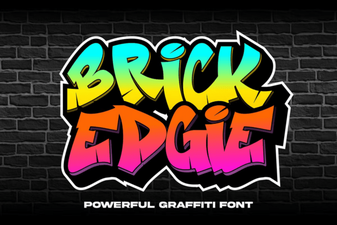 Brick Edgie Font Free Download - Bold Display Typeface
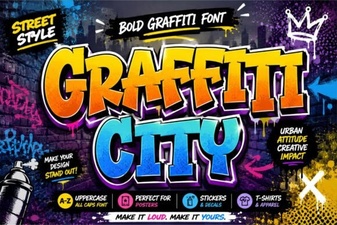 Graffiti City Font: Urban Creativity for Design Projects
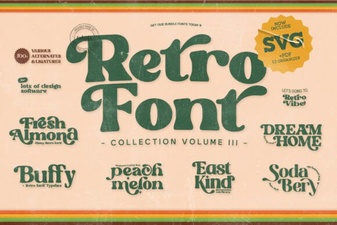 Retro Groovy Bundle Font Collection for Creative Design Projects
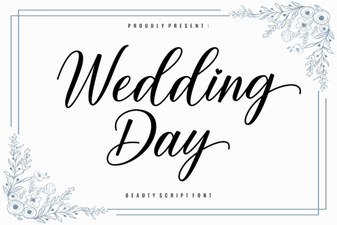 Elegant Wedding Day Font for Invitations and Diy Projects
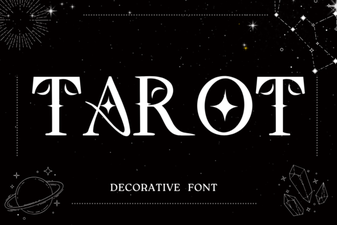 Enchanting Tarot Fonts for Mystical Design Projects
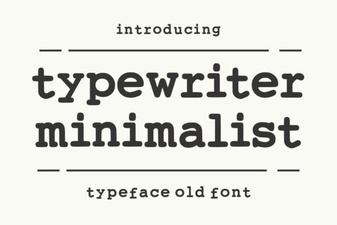 Typewriter Minimalist Font for Clean Retro Design